The artificial intelligence (AI) boom has dominated headlines, stock markets, and boardroom discussions for the past two years. As companies race to adopt generative AI, investors have poured billions into technology giants and startups promising groundbreaking innovation. Yet not everyone is convinced this momentum is sustainable. Erik Gordon, a prominent tech and business expert at the University of Michigan’s Ross School of Business, has sounded a stark warning: investors could “suffer” far more from the AI frenzy than they did during the infamous dot-com crash of the early 2000s.
A Frenzy Fueled by Fear of Missing Out
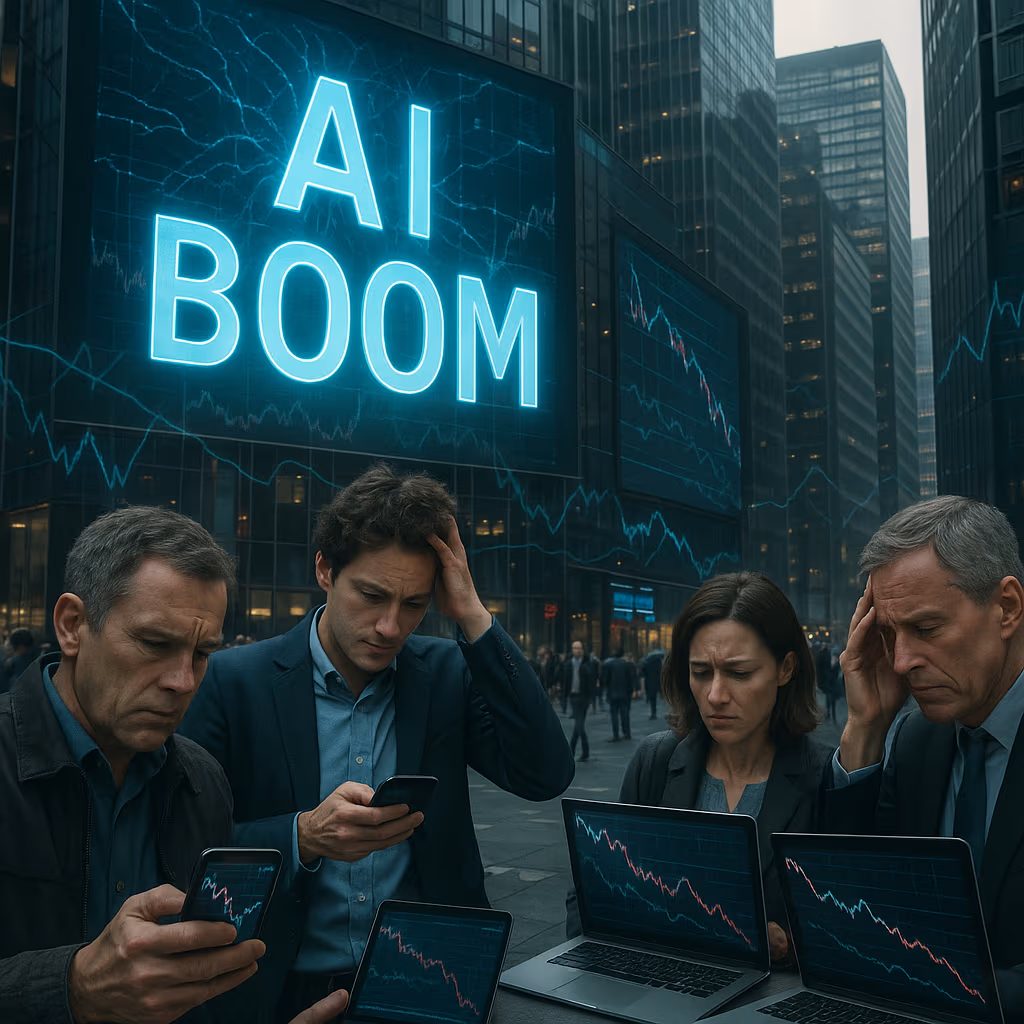
Gordon argues that the AI market has all the hallmarks of an overheated bubble. Just like the late 1990s when internet companies skyrocketed in value without sustainable business models, today’s AI boom is being fueled by hype and fear of missing out. Investors—ranging from hedge funds to individual traders—are betting big on companies that attach the words “AI-powered” to their pitches.
But Gordon warns that this mindset is dangerous. The sheer speed of capital flooding into AI projects may outpace actual technological capabilities, leaving investors with overpriced assets and little to show for their risks. “The dot-com bubble hurt, but what’s coming could hurt even more,” he said, suggesting that AI’s broad reach across industries makes the risks even greater.
Comparing AI to the Dot-Com Crash
The dot-com bust of 2000 saw trillions of dollars wiped off the stock market as internet companies collapsed under the weight of unrealistic valuations. Investors who believed every online business would be the next Amazon or eBay were left with devastating losses.
Gordon sees eerie similarities in today’s AI surge. The difference, however, is that the scale of AI’s adoption is far broader. While the internet primarily disrupted communication and commerce, AI is seeping into nearly every industry—from healthcare and finance to manufacturing and entertainment. That expansion creates both unprecedented opportunities and massive risks. If even a fraction of the overvalued companies fail, the ripple effects could shake entire sectors of the global economy.
Winners and Survivors in the AI Economy
While Gordon warns of pain ahead, he does not dismiss AI’s transformative potential. Like the internet, AI will reshape industries in ways we cannot yet fully grasp. However, not every company promising AI innovation will survive. He expects a Darwinian shakeout where only the strongest firms—those with real products, scalable infrastructure, and proven demand—will endure.
In other words, just as Amazon, Google, and eBay survived the dot-com collapse and went on to dominate the digital economy, a handful of true AI leaders will rise from the rubble of failed experiments. But identifying those winners today is almost impossible for the average investor, which makes speculation especially dangerous.
The Risk of Overextension
One of Gordon’s strongest arguments lies in the financial overextension of AI companies and their backers. Massive investments in hardware, such as expensive AI chips, data centers, and high-energy computing systems, require enormous upfront capital. Startups betting on breakthrough AI applications face high burn rates and limited paths to profitability.
Meanwhile, public companies like Nvidia, Microsoft, and Alphabet are riding waves of enthusiasm that have pushed their valuations to record highs. Gordon notes that even solid companies can be caught in bubbles if expectations outstrip their actual growth potential. “When reality sets in,” he warns, “valuations collapse, and ordinary investors are left holding the bag.”
The Human Cost of the Coming Shakeout
Beyond financial markets, Gordon raises concerns about the broader social and economic impacts. The dot-com crash led to widespread layoffs, shuttered companies, and a deep sense of disillusionment in technology’s promises. A similar fallout from the AI boom could have even wider consequences, given how embedded AI is becoming in critical sectors.
Workers retrained for AI-related roles may find themselves displaced once again if startups collapse. Enterprises that invested heavily in AI integration may face financial strain. And for society at large, public trust in technological progress could erode if promises of revolutionary change turn into disappointment.
Advice for Cautious Investors
Despite his dire warnings, Gordon does not advocate avoiding AI altogether. Instead, he urges investors to approach the sector with extreme caution. Diversification, careful due diligence, and a focus on companies with demonstrable revenue streams are essential.
“Don’t chase every AI headline,” he advises. “Invest in firms with sustainable models, not just those riding the hype.” He emphasizes the importance of patience, reminding investors that genuine technological revolutions take time to mature. Jumping in too fast may leave portfolios vulnerable to the inevitable correction.
A Necessary Reckoning?
Paradoxically, Gordon suggests that a market correction could be healthy in the long run. By weeding out weak players and speculative ventures, the crash would clear the path for genuine innovation to flourish. “What remains after the pain,” he argues, “will be stronger, more resilient companies that actually deliver value.”
This cycle of boom and bust has defined past technological revolutions. The railroads, the automobile, the internet—all experienced periods of excessive speculation followed by painful contractions. AI, he believes, will be no different. The question is not whether the bubble will burst, but how much damage it will cause before a stable AI-driven economy emerges.
The Bottom Line
Erik Gordon’s warning is not an outright rejection of AI’s potential. Instead, it is a sobering reminder that hype, speculation, and unchecked enthusiasm can be as dangerous as they are exciting. Investors chasing quick profits may end up suffering more than they did during the dot-com crash, while only a handful of true AI innovators will define the future.
For now, the AI boom is a story of extraordinary promise and extraordinary peril. And as Gordon cautions, the coming years will determine who reaps the rewards—and who suffers the fallout.