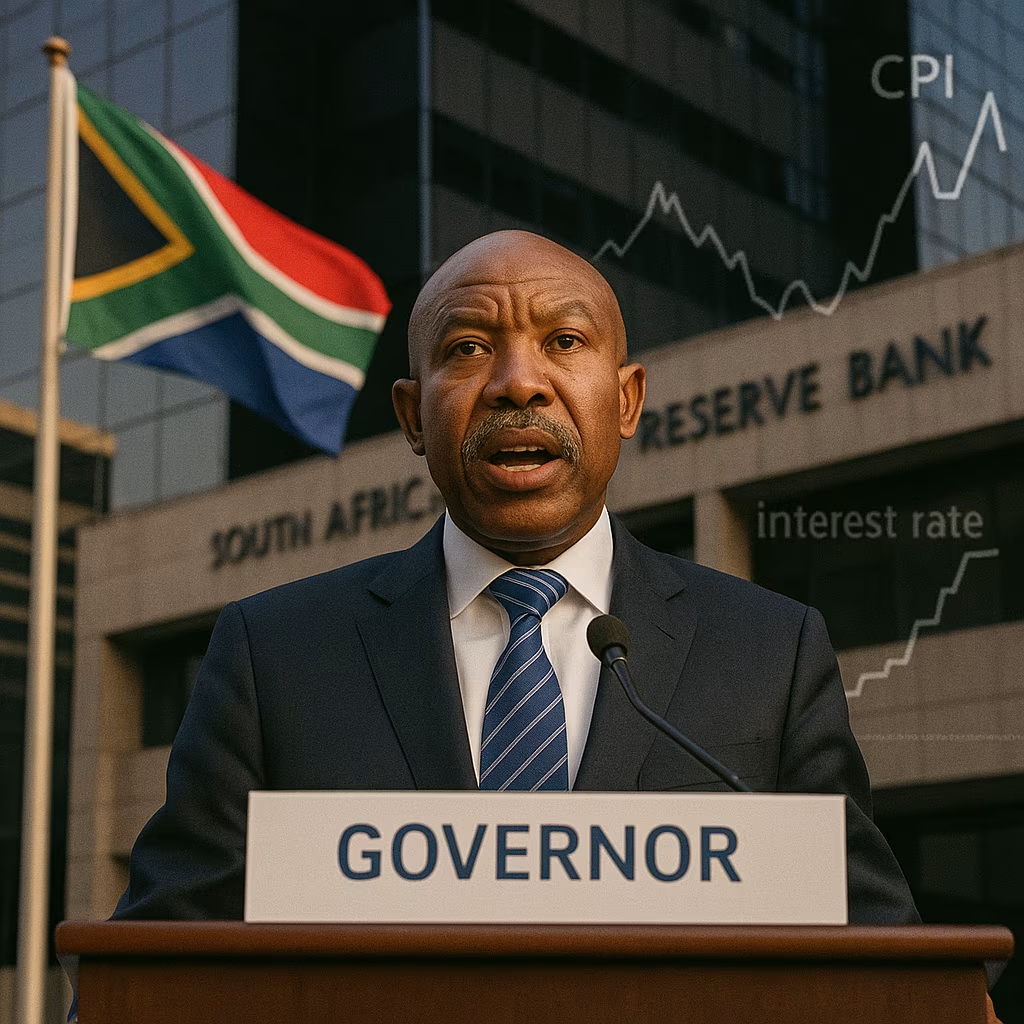
South African Reserve Bank (SARB) Governor Lesetja Kganyago has indicated that if the country’s consumer price index (CPI) approaches the midpoint of the central bank’s 3% to 6% target range, it could create room for interest-rate cuts. His remarks come as inflation shows signs of moderating, raising hopes among businesses and households for lower borrowing costs.
Inflation Moving Closer to Target
Speaking at an economic policy forum, Kganyago stressed that the SARB’s primary focus remains on price stability. While CPI has eased from last year’s highs, it remains above the desired 3% midpoint.
“If inflation approaches 3%, we will have scope to adjust policy rates to support the economy without jeopardizing our inflation objectives,” Kganyago said.
This statement reinforces the SARB’s data-driven approach, emphasizing that rate cuts will only be considered if inflation trends remain consistent with the central bank’s long-term stability goals.
The Current Economic Landscape
South Africa’s economy continues to face a complex set of challenges, including sluggish growth, structural constraints, and volatile global market conditions. Key indicators include:
- CPI Inflation – Annual consumer inflation has moderated from above 7% in 2022 to around 5% recently, largely due to easing food and fuel prices.
- Economic Growth – GDP growth remains subdued, with the economy expanding by less than 1% in recent quarters amid power shortages, infrastructure bottlenecks, and weak investment sentiment.
- Labor Market – Unemployment remains high, hovering around 32%, limiting domestic demand and consumer spending power.
- Currency Volatility – The South African rand remains sensitive to global risk sentiment and capital flows, influenced by both domestic and international developments.
Linking Inflation to Policy Easing
Kganyago’s remarks suggest that the SARB is not inclined to rush into rate cuts, even as inflation trends lower. Instead, the central bank will look for sustained progress toward the 3% mark, alongside anchored inflation expectations, before taking decisive action.
This cautious stance is rooted in lessons from past cycles, where premature easing sometimes led to renewed price pressures and currency instability.
Balancing Inflation and Growth
The SARB operates under a mandate to achieve price stability while supporting balanced and sustainable economic growth. In the current environment, the priority remains ensuring that inflation is firmly under control before shifting to a growth-supportive stance.
Kganyago acknowledged that high borrowing costs are weighing on credit demand and investment, but reiterated that lowering rates without firm evidence of stable, low inflation could undermine the central bank’s credibility.
Market Reaction
Financial markets responded to Kganyago’s comments with cautious optimism. Government bond yields edged slightly lower on expectations that rate cuts could come later in the year if inflation continues to trend down. The rand strengthened modestly, reflecting confidence in the SARB’s disciplined approach.
Analysts noted that while the SARB’s inflation-targeting framework remains strict, the governor’s comments suggest that a turning point in policy could be on the horizon if conditions align.
Risks to the Outlook
While the inflation trend appears favorable, several risks could complicate the SARB’s path toward easing:
- Energy Prices – Any rebound in global oil prices could filter into higher domestic fuel costs and overall CPI.
- Rand Weakness – A sharp depreciation in the currency could push up import prices and reverse recent inflation gains.
- Food Supply Shocks – Droughts or supply chain disruptions could lead to spikes in food inflation, a key driver of household costs.
- Global Monetary Policy – Changes in U.S. Federal Reserve or European Central Bank policy could affect capital flows and exchange rate stability.
The Road Ahead
The SARB’s next monetary policy decisions will hinge on inflation data in the coming months. Should CPI continue to move closer to the 3% midpoint and inflation expectations remain anchored, the case for rate cuts will strengthen.
However, Kganyago made clear that the central bank will remain vigilant and prioritize long-term stability over short-term stimulus. This means any easing cycle is likely to be gradual and carefully calibrated.
Lesetja Kganyago’s remarks highlight the importance of sustained progress in bringing inflation closer to the midpoint of the SARB’s target range before considering interest-rate cuts. While South Africa’s economy could benefit from lower borrowing costs, the central bank’s disciplined approach aims to ensure that such a move does not jeopardize price stability.
If inflation trends continue favorably, South Africans may see relief in interest rates later this year — but the decision will rest firmly on data, not market pressure.