In a world increasingly driven by artificial intelligence, a deeper and more profound concept is beginning to take shape—Living Intelligence. While AI systems replicate cognitive processes through code and algorithms, living intelligence explores a broader vision: one that combines biological life, self-organization, consciousness, and environmental interaction in dynamic, adaptive ways.
Living intelligence is not confined to circuits or code—it refers to intelligence expressed through living systems, from microorganisms and plants to the human brain and, potentially, bio-hybrid machines. It invites us to rethink what it means to be “intelligent” and challenges the boundaries between natural and artificial cognition.
As research progresses in fields like synthetic biology, bio-robotics, and neuroscience, living intelligence may be the next major leap—not just for computing, but for our understanding of life itself.
What Is Living Intelligence?
Living intelligence is a term that encompasses the innate, adaptive intelligence found in biological organisms and their ability to sense, process, and respond to environmental inputs in a purposeful way. Unlike artificial intelligence, which operates on structured logic and predefined data, living intelligence emerges through evolution, interaction, and self-regulation.
Examples of living intelligence include:
- A slime mold solving mazes and optimizing nutrient paths without a nervous system
- A colony of ants collectively adapting their behavior to solve complex foraging problems
- Human immune systems recognizing and neutralizing new pathogens without explicit instruction
- The brain reorganizing itself through neuroplasticity after injury
These systems are decentralized, resilient, and emergent—traits that have inspired scientists and technologists to explore whether we can integrate or emulate them in synthetic systems.
Living vs. Artificial Intelligence
While artificial intelligence is designed with mathematical models and neural networks, living intelligence arises organically and often unpredictably. Here’s a brief comparison:
| Trait | Artificial Intelligence | Living Intelligence |
|---|---|---|
| Structure | Predefined algorithms | Emergent, adaptive processes |
| Learning Method | Supervised or unsupervised | Experience, evolution |
| Flexibility | Limited to training data | Contextual and situational |
| Energy Efficiency | High computational cost | Extremely efficient |
| Consciousness Potential | Debated and speculative | Present in higher organisms |
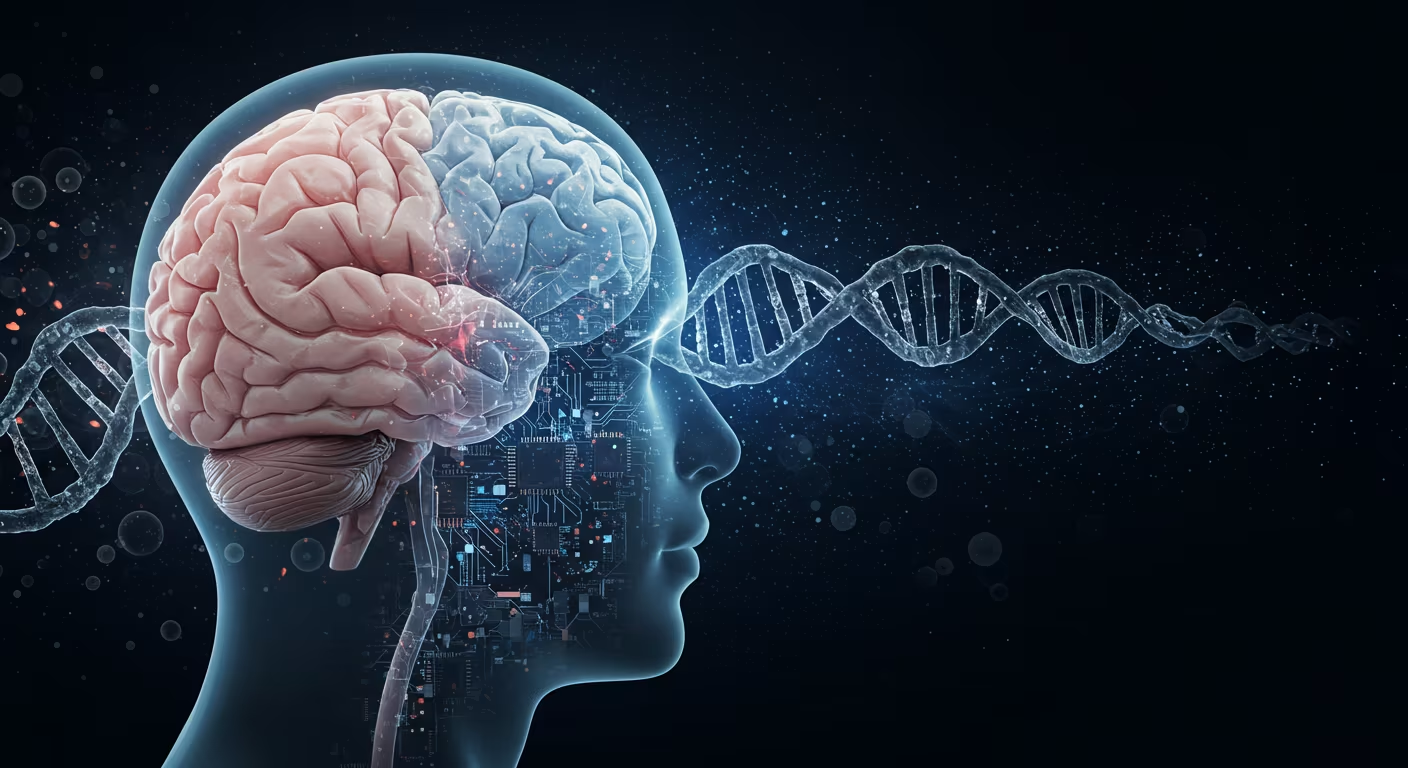
As the boundaries blur—especially with advancements in brain-computer interfaces and organoid computing—the overlap between the two forms of intelligence becomes a fertile area for exploration.
The Rise of Bio-Hybrid Systems
One of the most exciting developments in the study of living intelligence is the creation of bio-hybrid systems—devices that combine living tissue with artificial components to create machines that can think, sense, or move with unprecedented sophistication.
Recent breakthroughs include:
- Brain Organoids in Computing: Scientists have begun growing mini-brain-like structures (organoids) in labs and connecting them to digital systems to study how they learn and store information. This could lead to organoid intelligence—a biological form of computing that mimics aspects of human cognition.
- Soft Robotics with Biological Tissue: Researchers are developing soft robots made of muscle tissue or bio-compatible materials that can move and heal themselves, inspired by the adaptability of living organisms.
- Synthetic Cells and Programmable Life: Synthetic biology is enabling scientists to program cells to perform tasks, such as targeting cancer or cleaning up pollution—essentially embedding intelligence into life at the cellular level.
These systems represent a new paradigm where intelligence is not just coded, but grown, trained, and evolved.
Applications of Living Intelligence
The real-world implications of harnessing living intelligence are vast, spanning medicine, technology, sustainability, and beyond.
1. Healthcare and Neuroscience
Understanding how the brain adapts and self-heals can lead to better treatments for neurodegenerative diseases, brain injuries, and mental health disorders. Bio-hybrid brain implants could someday restore memory or control prosthetic limbs through thought alone.
2. Environmental Sensing and Repair
Living systems can be deployed for bio-remediation. For example, genetically modified bacteria might clean oil spills or neutralize pollutants, using their innate intelligence to adapt to environmental conditions.
3. Sustainable Architecture and Smart Materials
Buildings of the future could incorporate bio-intelligent materials that self-adjust to temperature or repair themselves when damaged—merging architecture with living ecosystems.
4. Ethical AI Development
Living intelligence models offer a blueprint for decentralized, cooperative learning that could guide the development of more ethical and adaptive AI systems.
5. Space Exploration
Bio-hybrid robots and self-regulating systems could be ideal for space missions, where adaptability and energy efficiency are critical for long-term survival in unpredictable environments.
Challenges and Ethical Considerations
Despite its promise, the development of living intelligence raises profound ethical and philosophical questions.
1. Defining Consciousness and Rights
If organoid-based systems begin to exhibit signs of learning or awareness, at what point do they deserve rights or ethical consideration?
2. Bio-Security Risks
Synthetic biology and programmable organisms could be misused, intentionally or accidentally, creating biohazards or uncontrolled ecosystems.
3. Integration with Humans
Merging living intelligence with human brains or bodies raises questions about identity, autonomy, and long-term consequences. How far should we go in enhancing our own intelligence?
4. Regulatory Gaps
As living intelligence technologies cross the boundaries of biology, robotics, and AI, current laws are insufficient to address the unique risks and responsibilities involved.
These challenges demand a multidisciplinary approach—involving ethicists, biologists, technologists, and policymakers to ensure that innovation aligns with human values.
Living Intelligence and the Future of Thinking
Perhaps the most intriguing aspect of living intelligence is how it forces us to redefine intelligence itself. For centuries, intelligence was measured by logic, memory, and language. But nature teaches us that intelligence can be decentralized, emotional, cooperative, and even embodied in non-neural organisms.
Living intelligence invites us to think beyond “smart” devices toward truly adaptive, self-evolving systems—machines that not only process data but learn from the world like living beings.
The fusion of living intelligence and artificial systems may not lead to machines that simply mimic us—but to entirely new forms of cognition that expand the boundaries of thought, creativity, and awareness.
Reimagining the Intelligent Future
Living intelligence is not just a scientific breakthrough—it’s a conceptual revolution. By understanding and harnessing the adaptive intelligence of life, we open the door to machines that grow, learn, and evolve in ways we’re only beginning to imagine.
As technology begins to meet biology at the level of neurons, cells, and consciousness, the future of intelligence won’t be about artificial vs. natural—it will be about co-intelligence, where living and synthetic minds collaborate, co-create, and coexist.
The next age of computing might not be digital or quantum—it might be alive.