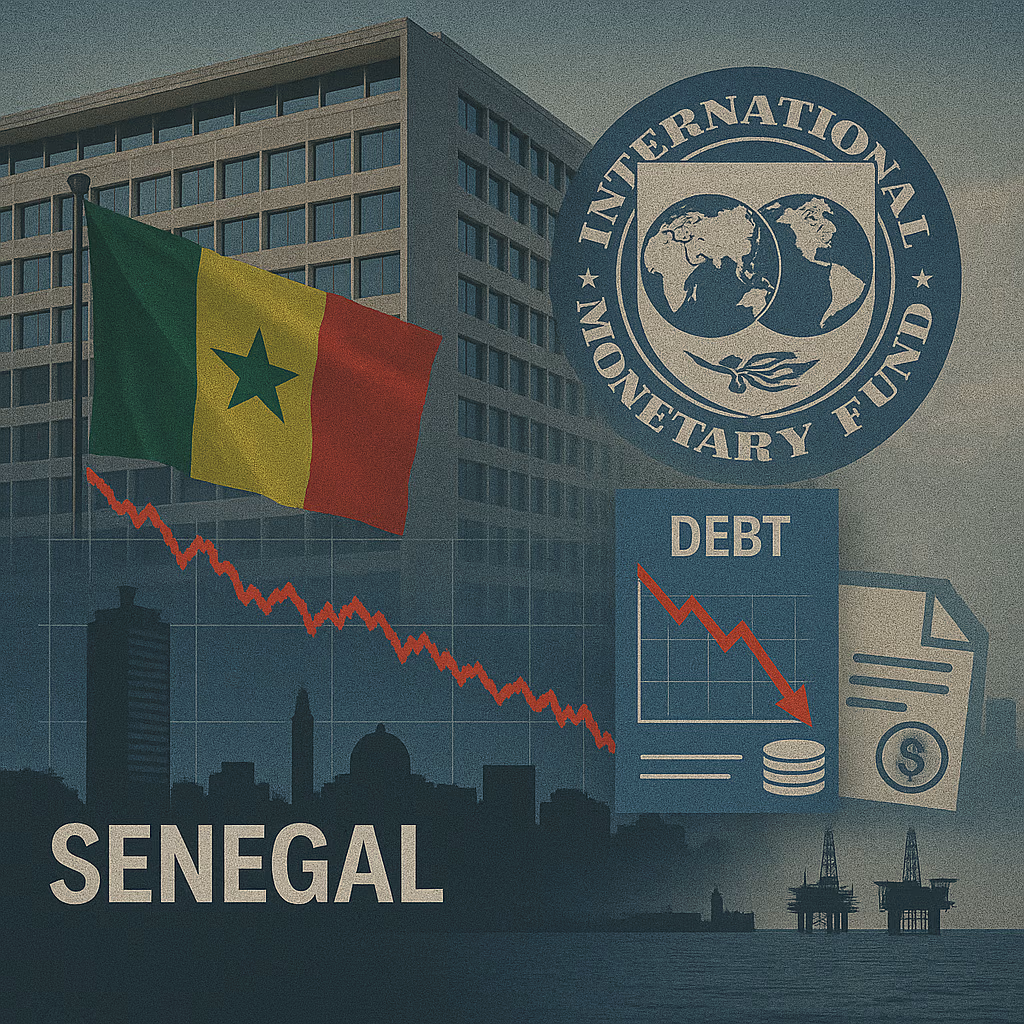
Senegal’s efforts to secure a new financing arrangement with the International Monetary Fund (IMF) face a critical test as the Fund’s delegation arrives in Dakar to assess the country’s fiscal position. At the center of discussions is the issue of “hidden debt”—financial obligations not fully disclosed in official government statistics—that could complicate Senegal’s negotiations for fresh support. The visit highlights both the opportunities and risks facing one of West Africa’s most promising economies as it seeks to balance debt sustainability with growth ambitions.
Why the IMF’s Visit Matters
Senegal has been one of the region’s most closely watched economies, praised for its political stability and ambitious investment programs. Yet the country, like many of its peers, has seen debt levels rise sharply in recent years. Rising global interest rates, the economic fallout of the pandemic, and fiscal pressures from social and infrastructure spending have left public finances stretched.
The IMF’s mission comes at a crucial time. Senegal is seeking a new financing package that would help stabilize its debt position, reassure investors, and create fiscal space for ongoing reforms. But the Fund is likely to scrutinize whether all of the country’s liabilities are transparently reported and properly managed.
The Issue of Hidden Debt
Hidden debt refers to obligations that are not immediately visible in headline figures, often arising from state-owned enterprises, government guarantees, or off-balance-sheet arrangements. In Senegal’s case, concerns have been raised about the extent of liabilities linked to energy, infrastructure, and public enterprises that may not be fully reflected in official debt data.
The IMF’s focus is to ensure that these contingent liabilities are accurately accounted for. Without clarity, hidden debt can suddenly surface, pushing actual debt levels far above projections and undermining fiscal credibility. Recent experiences in other African countries, where undisclosed obligations triggered crises, have made the Fund especially vigilant.
Senegal’s Debt Landscape
Official data indicates that Senegal’s debt-to-GDP ratio has risen above 70%, a level considered high by emerging-market standards. While the country has so far managed to meet its obligations, the pace of borrowing has accelerated, raising questions about long-term sustainability.
A portion of this debt is external, denominated in foreign currency, which exposes Senegal to exchange rate risks. With the CFA franc pegged to the euro, fluctuations in global financial markets can impact repayment costs. Domestic debt, meanwhile, carries high interest burdens, crowding out spending on development priorities.
The Government’s Balancing Act
Senegalese authorities have defended their borrowing strategy, arguing that much of the debt has been used to finance critical infrastructure—roads, ports, and energy projects—that will support long-term growth. The government has also pointed to reforms aimed at strengthening revenue collection and improving expenditure efficiency.
At the same time, officials acknowledge the importance of transparency and are cooperating with the IMF to provide greater visibility into public finances. The challenge lies in balancing immediate development needs with fiscal prudence, particularly as elections and political commitments put additional pressure on budgets.
Investor Confidence at Stake
For international investors, the IMF’s assessment is crucial. Senegal has been a regular issuer in international capital markets, tapping Eurobonds and other instruments to finance its projects. Any indication of hidden debt or lack of transparency could erode investor confidence, driving up borrowing costs and reducing access to external funding.
Conversely, a strong IMF endorsement—backed by a credible financing arrangement—could reassure markets and unlock concessional financing from multilateral partners. This would help Senegal manage upcoming maturities and avoid a reliance on expensive short-term borrowing.
The Role of Energy and Future Growth
Senegal’s medium-term growth prospects remain bright, particularly with the development of offshore oil and gas reserves expected to come online in the coming years. These projects have the potential to significantly boost government revenues, reduce fiscal deficits, and improve external balances.
However, the benefits will take time to materialize, and risks remain. Global energy price volatility, delays in project implementation, or governance challenges could limit the expected windfall. The IMF is likely to weigh these factors carefully in its analysis of Senegal’s debt sustainability.
Lessons from the Region
Senegal’s situation is part of a broader pattern in Sub-Saharan Africa, where several countries have struggled with hidden debt revelations. Mozambique, Zambia, and Ghana have all faced crises triggered by undisclosed or underestimated liabilities, leading to defaults, bailouts, or severe austerity measures.
The IMF’s insistence on transparency is designed to prevent Senegal from following a similar path. By addressing potential risks now, Senegal has an opportunity to preserve market confidence and avoid more disruptive measures later.
What Happens Next
The IMF mission will assess Senegal’s fiscal position, debt sustainability, and reform commitments. If the review is favorable, negotiations could progress toward a new Extended Credit Facility (ECF) or Extended Fund Facility (EFF) arrangement, providing multi-year financial support.
Such a program would not only deliver direct financing but also serve as a policy anchor, guiding fiscal reforms and reassuring investors. However, the Fund is expected to demand strict conditions: improved debt reporting, stronger oversight of state-owned enterprises, and credible plans to reduce deficits over time.
Conclusion: A Defining Test for Senegal
The IMF’s visit represents a defining moment for Senegal’s economic strategy. The focus on hidden debt underscores the importance of transparency in sustaining growth and maintaining investor trust. For the government, this is both a challenge and an opportunity: by addressing vulnerabilities head-on, Senegal can secure the financing it needs while reinforcing its reputation as one of West Africa’s more stable and forward-looking economies.
Whether the outcome is a new IMF-backed program or a tougher path to fiscal reform, the decisions made in the coming months will shape Senegal’s debt trajectory and economic prospects for years to come.