For decades, the nuclear power industry has been caught in a public relations struggle. Once heralded as the energy source of the future, it has instead been overshadowed by safety concerns, high costs, and catastrophic incidents like Chernobyl and Fukushima. Despite its potential for delivering massive amounts of carbon-free electricity, the sector has remained largely “stuck,” unable to overcome public skepticism and bureaucratic hurdles.
Now, a surprising ally may help nuclear energy shake off its decades-long stigma: artificial intelligence. As the AI boom accelerates, the technology’s potential applications in nuclear engineering could streamline operations, enhance safety, and make the industry more economically competitive — potentially changing how the public perceives it.
The Nuclear Industry’s PR Problem
The nuclear sector’s reputation issues run deep. Since the 1970s, public fears about accidents, radiation exposure, and nuclear waste have shaped policy decisions and investment patterns. Incidents like Three Mile Island in 1979, Chernobyl in 1986, and Fukushima Daiichi in 2011 reinforced these fears, leading many countries to scale back nuclear projects or shut down plants entirely.
At the same time, renewable energy sources like wind and solar have surged in popularity, offering a cleaner, safer public image. Nuclear energy’s inability to effectively market its role in reducing greenhouse gas emissions has only compounded the problem.
Yet the reality is that nuclear power remains one of the most reliable and scalable forms of carbon-free energy available today. A single plant can produce continuous electricity for decades, making it an essential tool for countries aiming to achieve net-zero emissions.
How AI Could Change the Game
AI’s potential impact on nuclear energy spans every stage of the industry — from design and construction to operations, maintenance, and safety monitoring.
1. Predictive Maintenance and Risk Reduction
One of the costliest challenges in nuclear energy is the upkeep of reactors and related infrastructure. AI can process vast amounts of sensor data to detect early signs of equipment degradation or potential failures. By predicting problems before they occur, plants can avoid costly shutdowns and improve safety.
2. Optimized Reactor Design
AI can accelerate the design of next-generation reactors, including small modular reactors (SMRs) and advanced fission systems. Using machine learning algorithms, engineers can simulate countless design variations and operating conditions in a fraction of the time it would take with traditional methods.
3. Enhanced Safety Protocols
AI-powered monitoring systems can track radiation levels, temperature fluctuations, and pressure changes in real time. In an emergency, these systems can quickly recommend — or even execute — corrective actions, reducing the risk of human error.
4. Waste Management Solutions
Nuclear waste storage and disposal remain hot-button issues. AI can optimize storage facility layouts, improve radiation shielding designs, and even assist in developing recycling techniques for spent fuel.
5. Cost Efficiency
By streamlining operations and reducing downtime, AI can help lower the overall cost of nuclear power generation, making it more competitive with renewables and fossil fuels.
The AI Boom and Energy Demand
Ironically, the rise of AI itself is contributing to nuclear’s potential resurgence. AI training and deployment require enormous computing power, which in turn demands vast amounts of electricity. Data centers are already consuming more energy than entire countries, and this demand will only grow in the coming years.
For tech companies racing to build and operate AI systems, stable, carbon-free energy sources are becoming a top priority. Nuclear power offers exactly that — and with AI helping to optimize its efficiency and safety, the case for investing in new plants becomes even stronger.
Some analysts suggest that AI companies could partner directly with nuclear providers to secure dedicated energy supplies, similar to how major tech firms have invested in renewable energy projects.
Industry Leaders Call for Action
Nuclear engineers and policy experts are increasingly vocal about the need for the industry to “get unstuck.” They argue that the combination of climate urgency, rising global electricity demand, and AI-driven efficiencies creates a once-in-a-generation opportunity to reintroduce nuclear power to the public in a more favorable light.
However, seizing this opportunity will require more than just better technology — it will demand a strategic communications overhaul. That means highlighting nuclear energy’s role in combating climate change, demonstrating AI-enhanced safety measures, and engaging with communities to rebuild trust.
Overcoming Public Skepticism
Public perception remains the biggest barrier. Even with AI-driven improvements, nuclear plants will still face opposition from environmental groups, policymakers, and local communities. Transparent communication about safety protocols, waste management, and long-term sustainability will be essential.
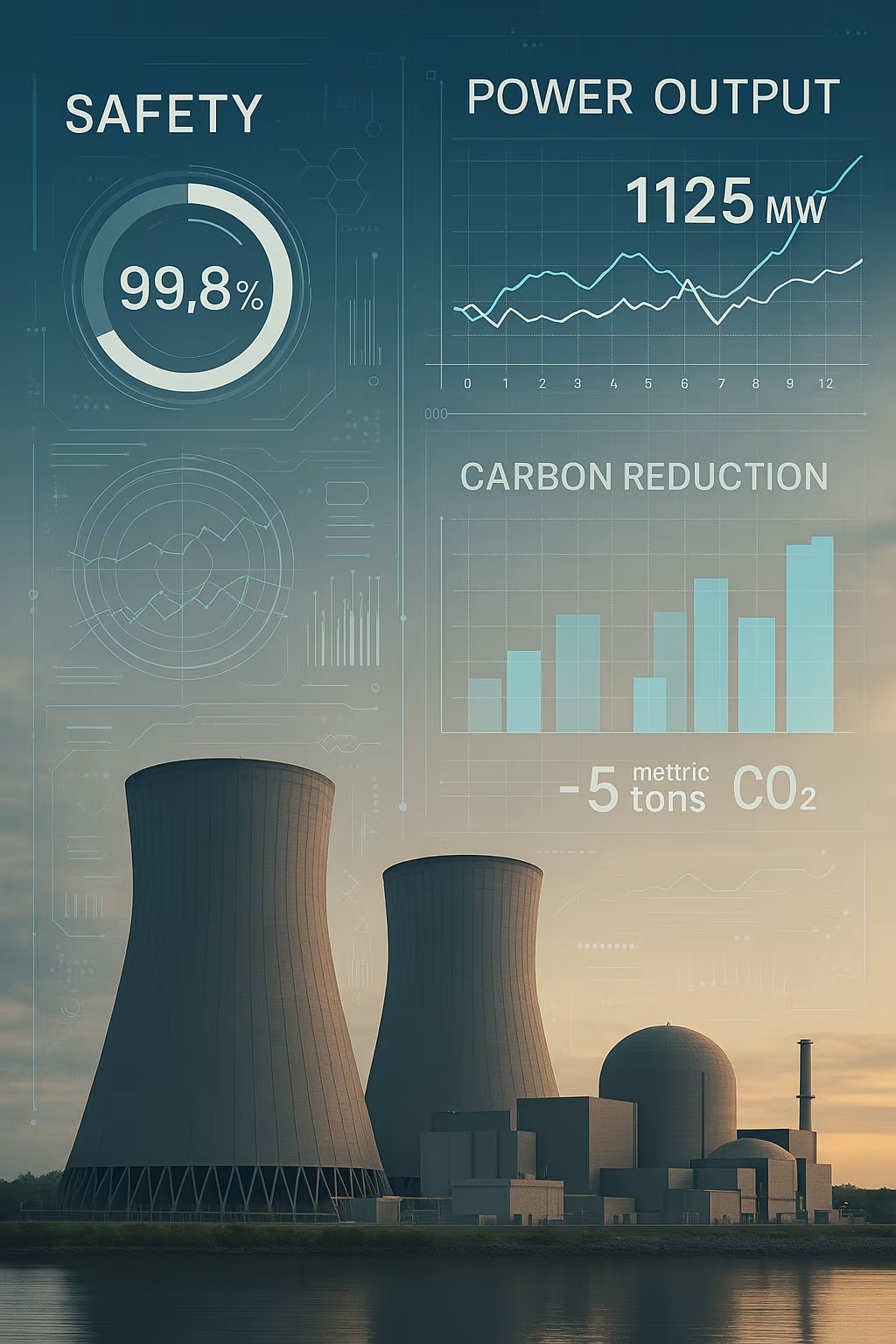
AI could play a role here as well — by providing clear, real-time data visualizations that show exactly how plants are operating, how risks are being managed, and how much carbon emissions are being avoided compared to fossil fuels.
The Role of Small Modular Reactors (SMRs)
SMRs are another promising development that could benefit from AI integration. These smaller, factory-built reactors are designed for flexibility, safety, and cost-effectiveness. AI can help optimize their deployment, monitor their performance remotely, and coordinate networks of reactors to respond to fluctuating energy demands.
Because SMRs have a smaller physical footprint and lower upfront costs, they may face less public resistance than traditional large-scale plants. Combined with AI-powered safety and efficiency features, SMRs could become a key entry point for nuclear’s image rehabilitation.
A Global Opportunity
Countries around the world are reconsidering nuclear energy’s role in their future power mix. France continues to invest heavily in its nuclear fleet, China is rapidly building new reactors, and even Japan has restarted some of its plants despite public concerns. In the United States, the Biden administration has pledged support for advanced nuclear technologies as part of its clean energy strategy.
AI-enhanced nuclear power could position these nations as leaders in both climate action and technological innovation. For developing countries, the combination of SMRs and AI could provide a pathway to reliable, low-carbon electricity without the need for massive, centralized infrastructure.
The nuclear industry stands at a crossroads. Years of bad PR and high-profile accidents have left deep scars, but the twin forces of climate urgency and AI-driven innovation may offer a chance for redemption.
If nuclear engineers can leverage AI to deliver safer, cheaper, and more efficient power — and communicate those advances effectively — the technology could reclaim its place as a cornerstone of the world’s clean energy future.
The challenge will be convincing not just policymakers and investors, but the public at large, that nuclear power in the AI era is fundamentally different from the past. That requires transparency, accountability, and a commitment to continuous improvement.
In a world racing to meet net-zero targets, there’s little room for the nuclear industry to remain stuck. With AI as both a tool and a catalyst, the time to move forward may finally be here.