On August 6, 1945, at 8:15 a.m. local time, the world witnessed the dawn of a devastating new era. The United States dropped the first atomic bomb used in warfare on the Japanese city of Hiroshima, unleashing destruction unlike anything the world had ever seen. Eighty years later, the memory of that day is preserved not just in history books, but in the haunting photographs that captured its immediate and long-lasting effects.
The bomb, nicknamed “Little Boy,” was dropped from the B-29 bomber Enola Gay. In seconds, Hiroshima was transformed from a bustling city into a flattened, burning wasteland. Tens of thousands were killed instantly. Many more would die in the weeks, months, and years that followed from injuries and radiation exposure.
These images and accounts from August 6, 1945, remain among the most chilling reminders of nuclear warfare’s catastrophic potential. As we reflect on the 80th anniversary of Hiroshima, we remember the victims, consider the consequences, and look toward a future shaped by the hard lessons of that historic day.
The Mission and the Bomb
The atomic bomb dropped on Hiroshima was the culmination of the Manhattan Project, a top-secret U.S. government program that had spent years and billions of dollars developing nuclear weapons. With World War II raging and Japan refusing unconditional surrender, U.S. leaders decided to use the bomb to force an end to the conflict—and demonstrate America’s new military power.
The B-29 bomber Enola Gay, piloted by Colonel Paul Tibbets, took off from Tinian Island and flew nearly six hours to reach its target. At precisely 8:15 a.m., the crew released the bomb over the heart of Hiroshima, a city of approximately 350,000 people.
The blast exploded 1,900 feet above ground. Within seconds, the temperature at the epicenter soared to over 7,000 degrees Fahrenheit. Buildings vaporized. Human bodies were reduced to shadows burned into stone. A massive shockwave and firestorm swept outward, obliterating nearly everything in a one-mile radius.
Immediate Devastation
The death toll on the first day is estimated at 70,000 to 80,000 people—men, women, children, factory workers, doctors, schoolteachers, and elderly civilians. Nearly 90% of the city’s buildings were destroyed or severely damaged. Hospitals collapsed, medical staff were killed, and survivors—many with severe burns and injuries—were left with nowhere to go for help.
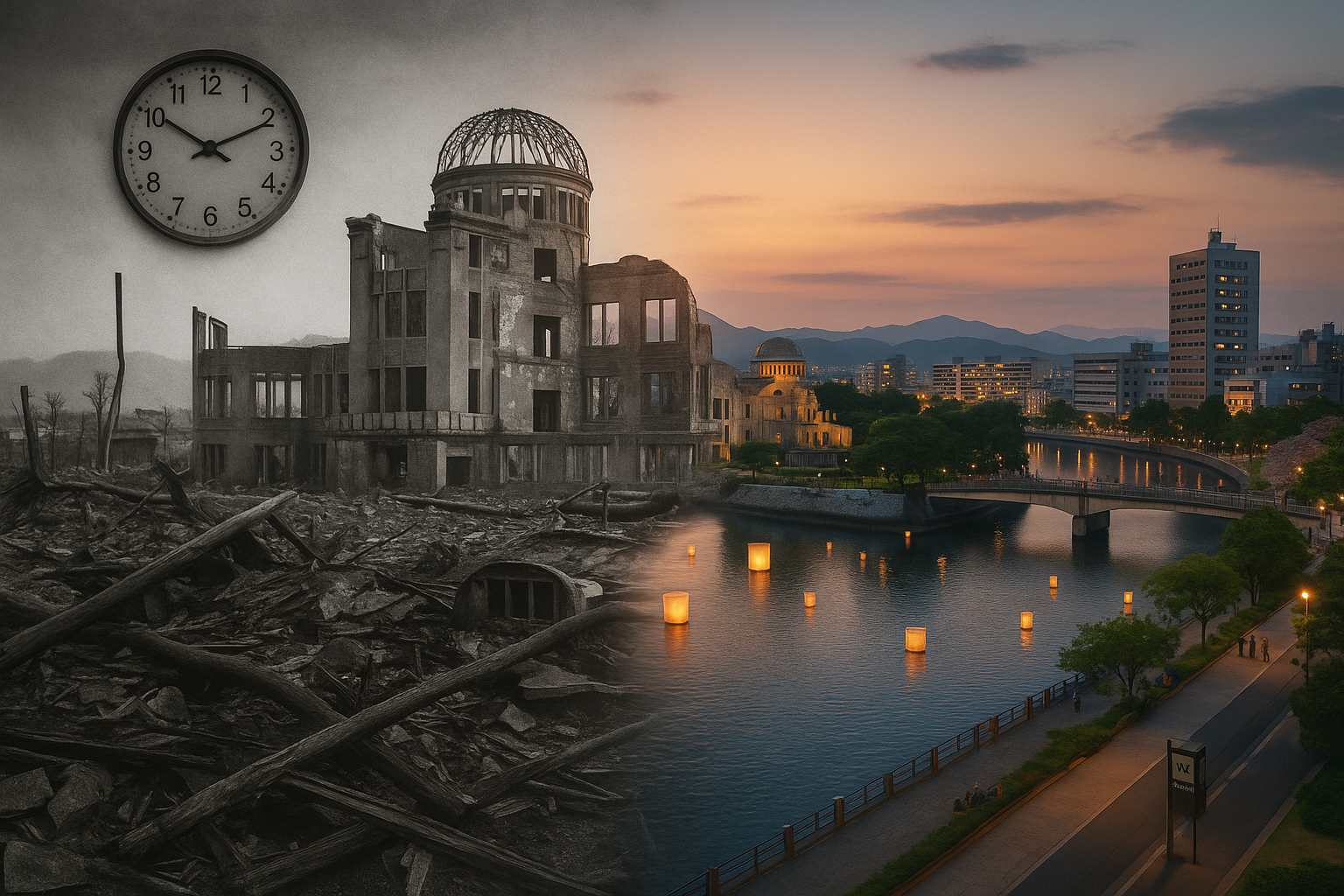
Photographs taken in the days following the attack show a city reduced to rubble, with only a handful of concrete structures still standing. One of the most famous is the Hiroshima Prefectural Industrial Promotion Hall, later preserved as the Genbaku Dome, or Atomic Bomb Dome. It stands today as a UNESCO World Heritage Site, a symbol of remembrance and warning.
Survivors’ Stories and Shadows of the Past
Some of the most harrowing evidence of the bomb’s power came not from destroyed buildings, but from the survivors themselves—known as hibakusha. Many bore physical and emotional scars for life. Black-and-white photos show people with shredded clothing, their skin hanging in ribbons. Others depict children with blank, haunted expressions, walking through scorched streets.
One iconic image captures a concrete staircase with the permanent shadow of a person who had been sitting there when the blast hit. Their body was vaporized, but the intense heat burned their outline into the stone.
These silent witnesses to nuclear horror are seared into humanity’s collective memory, reminding future generations of the cost of nuclear war.
Radiation and Lingering Effects
In the days and weeks after the bombing, radiation sickness claimed thousands more lives. People who appeared unharmed began to suffer from nausea, hair loss, bleeding gums, and skin lesions. Hospitals were overwhelmed, and even doctors and nurses succumbed to the mysterious illness no one yet understood.
In total, by the end of 1945, over 140,000 people in Hiroshima had died as a result of the atomic bombing. Survivors continued to face increased risks of leukemia, cancers, and genetic damage for decades.
Photographs from the aftermath show mass cremations, makeshift graves, and families desperately searching for missing loved ones in the rubble.
The Second Bomb and the End of War
Just three days after Hiroshima, on August 9, 1945, the U.S. dropped a second atomic bomb on Nagasaki, killing an estimated 70,000 more people. On August 15, Japan announced its surrender, bringing World War II to a close.
While some argue that the atomic bombings hastened the end of the war and saved lives that would have been lost in a full invasion of Japan, others see them as unnecessary and morally unjustifiable.
What remains beyond debate is the profound and permanent impact these weapons had on the world—and on the innocent civilians caught in the crossfire.
Legacy and Lessons 80 Years Later
Today, Hiroshima is a thriving city, rebuilt and reborn. Yet the memory of August 6, 1945, remains deeply embedded in its culture. The Hiroshima Peace Memorial Park, Peace Memorial Museum, and annual Peace Memorial Ceremony continue to honor the victims and promote nuclear disarmament.
Each year, on the anniversary of the bombing, thousands gather to float lanterns on the Motoyasu River in tribute. Moments of silence are observed at 8:15 a.m., the exact time the bomb detonated.
The haunting photographs from that day—scorched landscapes, dazed survivors, vaporized shadows—still speak louder than words. They remind us of what is at stake when nations turn to nuclear weapons, and of our shared responsibility to ensure such devastation is never repeated.
Eighty years after Hiroshima, we are left with chilling images and painful truths. The bombing did not just destroy a city—it altered the course of human history. The survivors, the rubble, and the photos etched into global consciousness are enduring calls for reflection, peace, and restraint.
In a world where nuclear weapons still exist, the legacy of Hiroshima is more than historical—it’s a living warning.